
deploying cloud servers in malaysia for game acceleration and video live broadcast requires taking into account low latency, high bandwidth and stability. this article focuses on "which cloud server is a good and practical deployment solution in malaysia under the scenario of game acceleration and video live broadcasting". it systematically sorts out the key points of selection and implementation suggestions to help technical decision-makers and operation and maintenance teams quickly locate the appropriate architecture and configuration.
key indicators for selecting cloud servers
when choosing a cloud server, first look at key indicators: network latency, bandwidth limit and jitter, instance computing power, io performance and availability zone distribution. games and live broadcasts are sensitive to latency and stability, so it is necessary to prioritize network quality and data center density in malaysia or adjacent areas, and pay attention to the provider's network interconnection and backbone network capabilities.
latency and region selection strategies
latency is a core indicator of game acceleration. priority is given to selecting nearby nodes in malaysia or southeast asia to reduce the number of cross-border hops and fiber transmission delays. for live broadcasts that require global access, edge nodes or nearby access points should be deployed locally based on the main audience distribution, and user requests can be routed to the nearest available resources using any cast or load balancing solution.
key points of network bandwidth and traffic control
video live broadcast needs to ensure continuous uplink bandwidth and peak concurrent traffic carrying, while games focus on high-frequency interaction of small packets. choose cloud resources that support on-demand expansion of bandwidth, burst capacity, and clear traffic accounting policies, and configure dedicated links or dedicated line interconnections at the network access layer to reduce jitter and packet loss rates, and combine qos and traffic scheduling policies to control congestion risks.
compute and storage configuration recommendations
game servers prefer high-frequency cpus and fast network io. the live streaming side requires stable upstream bandwidth and storage with good writing performance (low-latency object storage or block storage). it is recommended to design horizontal expansion based on the number of concurrent users, use containers or virtual machines with automatic scaling, and use hot and cold separation and caching strategies at the storage level to reduce i/o bottlenecks.
cdn and edge node deployment methods
for live video streaming, cdn and edge nodes can significantly reduce back-to-origin traffic and viewers’ first-screen time. deployment recommendations are to configure edge caching points in malaysia and key audience provinces, combine real-time transcoding with multi-bitrate output, and keep dynamic interactions (such as match rooms or game synchronization) close to the origin server to ensure a low-latency experience.
high availability and elastic expansion practices
building a high-availability architecture requires deploying instances across availability zones, configuring automatic failover, and synchronizing multiple replicas of data. combined with the elastic scaling strategy to deal with sudden traffic peaks, health check and fault isolation are used to reduce the risk of single point failure. backup and rollback solutions should cover both configuration and data categories to ensure quick recovery and minimize the operation and maintenance window.
summary and implementation suggestions
taken together, there is no single answer to "which cloud server in malaysia is good for game acceleration and live video streaming?" the selection should be based on latency, bandwidth, computing and geographical distribution. when launching, we first conduct a small-scale pressure test and audience distribution analysis, prioritize local nodes and cdn edges as needed, and use elastic scaling and multi-availability zone redundancy to ensure stability and cost control.
- Latest articles
- Practical Tips for Identifying Common Scams When Buying Japanese Original IPs and Avoiding Being Scammed
- Price Comparison: Renting Independent Servers in Malaysia – Quotes from Various Data Center Providers
- Example test: Where are the fastest US cloud servers? Real speed reports from different providers
- Troubleshooting guide: Checklist of steps to figure out why a Hong Kong VPS can’t access websites in Hong Kong
- Risk Warning: Hidden Costs and Limitations of Free Cloud Server Services in Hong Kong
- How to evaluate the cache hit rate performance of Taiwan’s CDN CN2 in different regions
- Which VPS provider in Malaysia is the best? A comprehensive comparison based on price-performance and after-sales support
- Detailed Explanation of Factors to Consider When Choosing a Data Center in Singapore: The Impact of Singapore CN2 VPS on Access Speed
- Where are Malaysia’s WeChat servers located? Geographical factors that affect message delivery speed
- Advantages of Hong Kong’s native IPs in supporting cross-border work and distance education at airports
- Popular tags
-

technical practice precautions for migrating malaysia’s registration-free cloud server website to registration-free service
technical practice: key considerations for migrating a website to a malaysian registration-free cloud server, including practical guides such as preparation, dns strategy, file and database migration, ssl configuration, seo retention and online verification. -
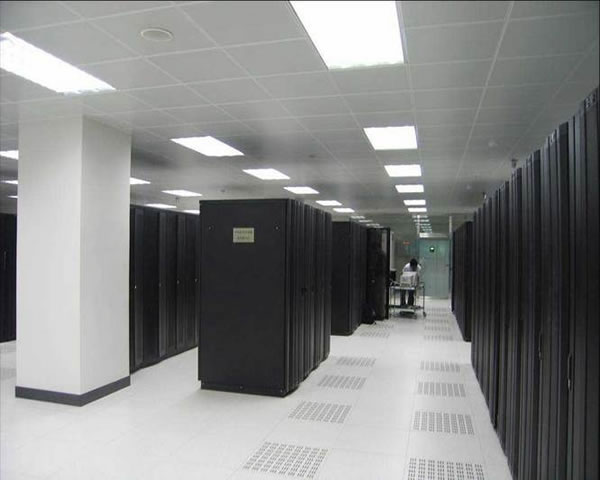
how to choose the malaysian cloud server hosting plan that’s right for you
this article will help you understand how to choose the malaysian cloud server hosting plan that suits you, including performance, price, security and other key factors. -
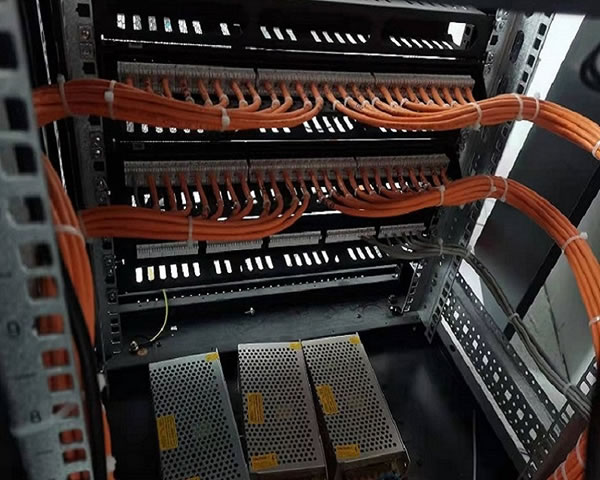
Does Big Brother Cloud provide cloud server services in Malaysia?
This article discusses whether Big Brother Cloud provides cloud server services in Malaysia and analyzes its advantages and market demand.